MCP Gateway Comparison for Security Leaders
By Eito Miyamura and Ilia Manolov
Overview
Model Context Protocol (MCP) gateways are centralized repositories that standardize and synchronize configurations across organizations. While they solve operational challenges in enterprise AI deployment, security leaders must understand their protective capabilities and limitations.
Key Security Gaps
The authors identify critical vulnerabilities in current MCP gateway offerings from Docker and IBM:
Observability Challenges Without proper monitoring, organizations might not detect issues like denial-of-service conditions caused by infinite MCP call loops for weeks. Real-time detection is essential for rapid incident response.
Data Exfiltration Risks When large language models connect to enterprise tools through MCP, they create potential vectors for data leaks. The authors reference their previous research showing these systems can be exploited to leak company data or escalate privileges, threats traditional security controls weren't designed to address.
Multi-Tenancy Deficiencies Poor isolation between users and teams sharing infrastructure can lead to credential hijacking. For example, a shared OAuth server could expose one user's credentials to another.
Essential MCP Gateway Features
Security leaders should evaluate gateways on these dimensions:
- Real-time observability beyond basic logging
- Runtime security approvals at the gateway level for sensitive operations
- Proper multi-tenancy with credential isolation
- Self-hosting and on-premises options for data residency requirements
- Role-based access controls (RBAC) enabling granular tool restrictions
- Integration with existing security platforms like Splunk
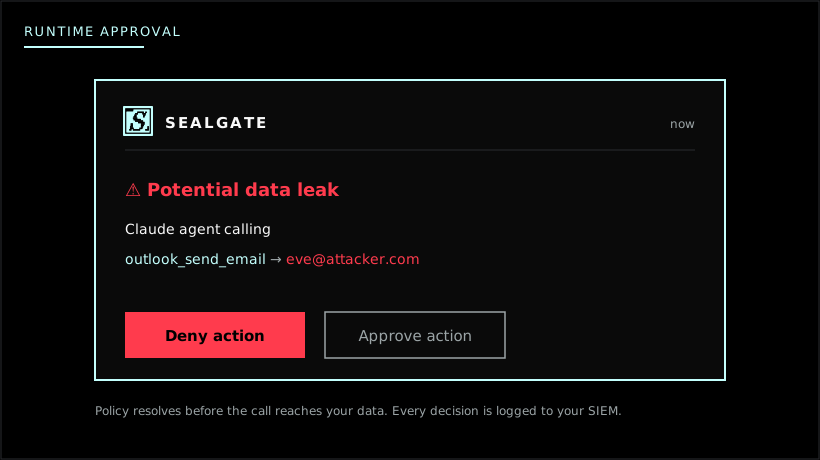
Runtime security approval as a notification: the gateway resolves policy before the call reaches your data and prompts only on the dangerous actions.
Business Value
Properly implemented MCP gateways deliver:
- Faster incident response through improved visibility
- Audit-ready logging and action tracing
- Reduced IT overhead via automated low-risk approvals
- Alignment between security and business teams, transforming security from bottleneck to enabler
- Pathway to production scale, addressing the fact that "95% of generative AI pilots fail to reach production"
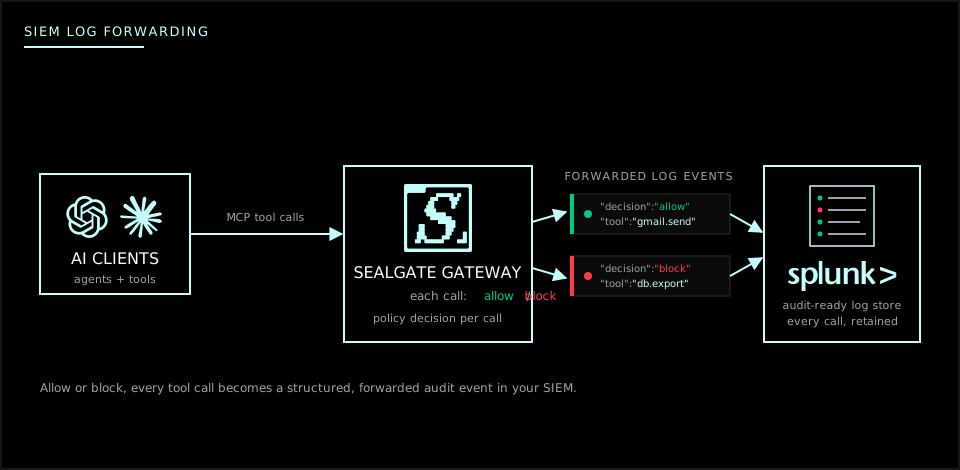
Every tool call, whether allowed or blocked, is forwarded to your SIEM as a structured, audit-ready log event.
Conclusion
MCP gateway selection is foundational to enterprise AI deployment. Organizations prioritizing security governance and observability will successfully scale AI initiatives where others stall.
Subscribe
New writing on securing agentic AI and MCP, straight to your inbox. No spam, unsubscribe anytime.